The string trio: a rarity in the chamber music world! The Aspen String Trio in their upper Midwest debut!
While the string quartet is often regarded as the gold standard in chamber music, the far rarer trio combination of violin, viola, and cello stands as one of the most refined, revealing, and compelling mediums in chamber music, possessing its own lineage, authority, and expressive character.
Occupying a distinct place in the repertoire, the string trio offers a refined interplay of three equal and independent voices whose transparency, individuality, and structural clarity reveal a concentrated artistry unmatched in larger ensembles. The trio is a medium of daring, and dialogue where the three voices create a transparency and intensity uniquely its own. Its apparent simplicity conceals a demanding art, challenging to compose and challenging to perform.
The Chamber Music Society of Lincoln Center says it so well: "The string trio—violin, viola, and cello—the chamber music connoisseur's delight. In the hands of master composers (and virtuoso performers), the string trio offers a peak listening adventure of stunning variety, engrossing dialogue, and transparent beauty.”
THE PROGRAM
Mozart’s Divertimento in E-flat major, K. 563 stands as the pinnacle of the string trio repertoire—a work of astonishing breadth, balance, and invention. Written in 1788, it transforms the trio’s inherent transparency into a showcase of compositional mastery, where every line is essential and the three voices have equal weight, revealing Mozart’s unmatched sense of dialogue, proportion, and melodic invention. Across its six movements he achieves a symphonic richness and emotional depth in texture of crystalline clarity. Far from a “divertimento” in the casual, entertainment sense, K. 563 reveals the string trio at its most exalted: intimate yet monumental, the summit of chamber music art.
John Harbison’s String Trio (2013) pays clear homage to Mozart’s K. 563 Divertimento, using that monumental work as both model and point of departure. Like Mozart, Harbison explores how three voices can sustain a rich, continuous conversation, balancing clarity with expressive complexity. The trio’s thematic material draws on the name Lionel Messi, (for Harbison, “the Mozart of soccer”) transformed into musical motives that thread through the score with wit and vitality. The result is a work that honors the classical ideal of balance and form while speaking in a distinctly contemporary voice—athletic, inventive, and deeply alive. Received with unalloyed critical acclaim, Harbison’s trio is considered “a major addition to the string trio repertory.”


Program notes
Mozart: Divertimento in Eb, K. 563
(coming soon)
Harbison: String Trio (2013)
John Harbison’s 2013 String Trio partially modeled on Mozart’s K. 563, is a radiant pillar in his chamber music repertoire: classical restraint, formal elegance, superb craftsmanship, and a piquant harmonic language that is pleasing to the ear, intellectually satisfying, and fully accessible.
Praise for Harbison’s String Trio
“The great string trios may be counted on the fingers of one hand, and Harbison's model was the greatest of all, Mozart's Divertimento in E flat, K563. Like that work, Harbison's Trio is in six movements, but their thematic material is derived from musical spellings of Lionel Messi's name (he is, says Harbison, the "Mozart of soccer")… Harbison’s Trio is wonderfully elegant and clear, and seems a major addition to the string trio repertory.” —Andrew Clements, The Guardian 9.26.2014
Harbison’s Trio is cast in six movements that revel in all sorts of textures and techniques. Sometimes the music is warm and tuneful, at other junctures it’s brooding and mysterious. In sum, it’s a piece that comes across as a major, expressively all-embracing entry into Harbison’s already formidable catalogue. —Jonathan Blumhofer, The ArtsFuse 9.8.2014
Large, ambitious string trios are relatively uncommon; the relatively lean textures available make the ensemble a less obvious choice for expressing big ideas than the quartet or piano trio. However, Mozart managed it, as did Schoenberg,and now we have Harbison's significant, half-hour essay. The composer plays to the strengths of the group; clarity of contrapuntal line and the potential for discussion between three distictive-voiced equals, a natural fit for Harbison's customary idiom. The six movements have a classical restraint and formal elegance and craftsmanship, in the composer's habitual extended tonal vocabulary, linearly conceived and rhythmically vital. —Records International https://www.recordsinternational.com/cd.php?cd=09Q078
The String Trio is a solid piece of craftsmanship, demonstrating Harbison's gift for composing dissonant counterpoint that is pleasing to the ear, intellectually satisfying, and fully accessible, possibly even to an audience unacquainted with modern techniques. Blair Sanderson, AllMusic.com, nd
The thematic material has the most extraordinary dramatic role-playing between instruments, and never shies from giving the viola star time... The most thrilling aspect was to hear counterpoint in dissonance and have it be sweet-sounding and agreeable. Tony Frankel, Stage and Cinema, Sep 27, 2017
Program note:
In his program note for the work, John Harbison nods at Mozart’s six-movement String Trio, K. 563 for inspiration, citing its “stretches of great learnedness and patches of casual geniality.” Indeed, the same might be said of Harbison’s trio, commissioned in 2013 for the Camerata Pacifica in California. The piece owes much to the Mozart work as is obvious in the opening descending arpeggiation. For Mozart, it is a simple E-flat major triad that lands firmly in elegant eighteenth-century phrasing, but for Harbison, it is an E minor triad that gives way to tritone tensions and chromatic inflections. The first movement intersperses quiet introspective intimacy with more energetic sections, but as Harbison says of Mozart’s work, it “exults in the sufficiency of two or three voices.” The striking upward gestures—also present in Mozart—become a motivic anchor for the entire work.
The sense of rising and falling is no less present in the second movement Adagio, filled with harmonic intensity. The violin ends the movement with a questioning rising fifth that Harbison subverts chromatically. The third movement Intermezzo parallels Mozart’s Menuetto both in structure and, at least initially, in character. In the triple meter middle section, Harbison presents the angular melodic lines in various guises: with bravura, with agitation, and sometimes as a lilting rocking motive.
Both Mozart and Harbison provide a set of variations in the fourth movement, the former using a gentile folk-inspired theme, and Harbison offering a wonderfully inflected theme that evokes American vernacular musical traditions. In addition to traditional melodic and rhythmic variations, the composer exploits the textural possibilities with pizzicato, arco markings, and harmonics. The fifth movement Intermezzo provides a subtle arch to the work (and Mozart, too, supplies a second Menuetto). The phrasing here gives the movement a pleading quality interrupted only slightly by the homophonic “misterioso” Trio section.
The Finale: Allegro moderato, opens with an ascending arpeggiation that provides a pleasing symmetry with the opening of the entire work. As with the Mozart, this movement provides contrasts: heard here between a needling and insistent repeated note gesture, syncopated angularity, and more searching lines that recall earlier movements. The final chords emphatically reaffirm the work’s harmonic pluralism with the energetic spirit of an eighteenth-century cadence. © 2019 Rebecca G. Marchand, Boston Chamber Music Society
________
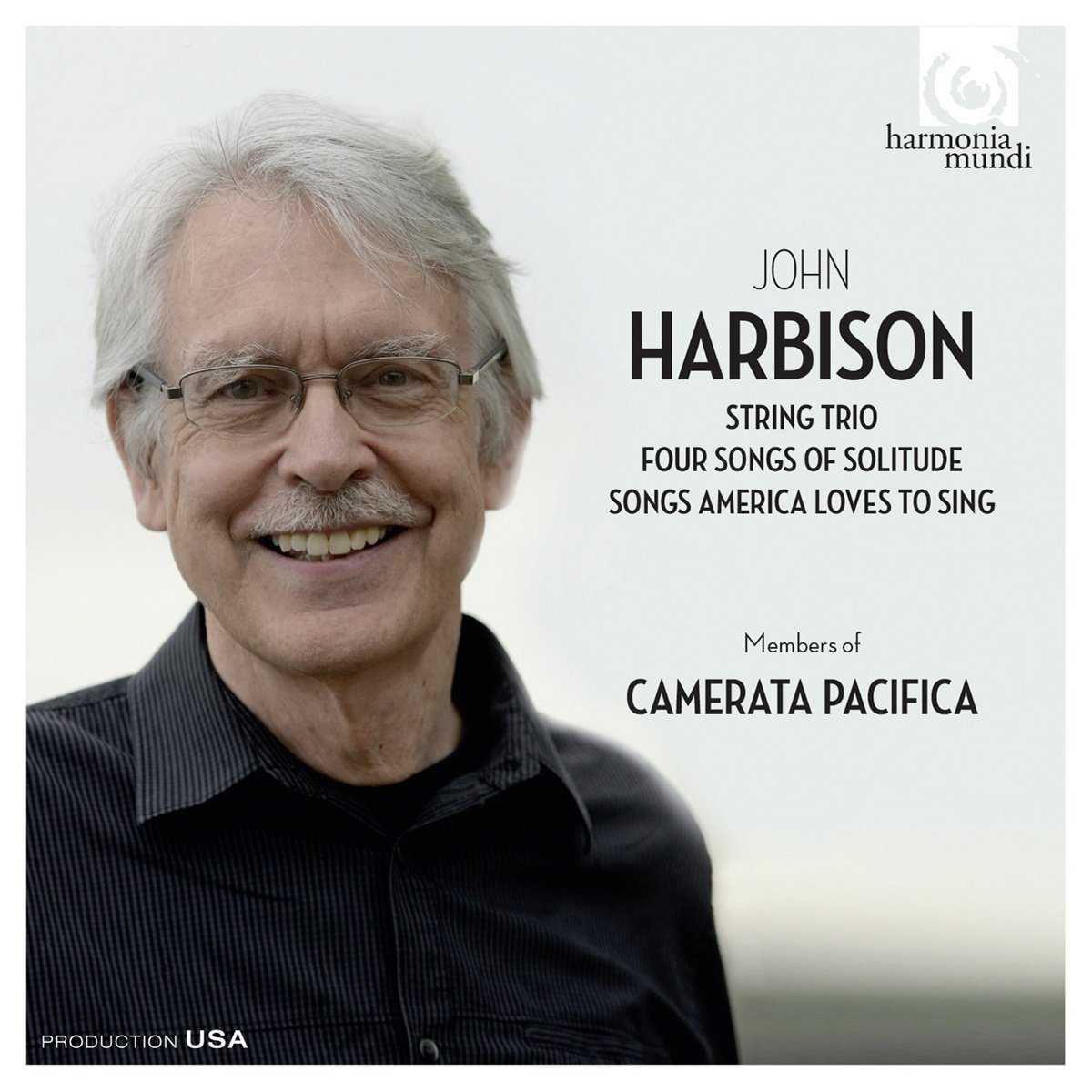
John Harbison is Institute Professo rEmeritus of Composition, Chamber Music, and Jazz at MIT. As one of America’s most distinguished artistic figures, he is recipient of numerous awards and honors, among them a MacArthur Fellowship and a Pulitzer Prize and the Heinz Award. He was a founding member of Emmanuel Music, presenting a Bach cantata as part of the liturgy since 1920, where he served as Acting Artistic Director and has just stepped down as Principal Guest Conductor. Harbison has held composer residencies with the Pittsburgh Symphony, the Los Angeles Philharmonic, the American Academy at Rome, at Tanglewood, Marlboro, Santa Fe, Aspen, and SongFest. His extensive catalog of concert music includes more than 300 works anchored by three operas, seven symphonies, twelve concerti, a ballet, six string quartets, numerous song cycles and chamber works, and a large body of sacred music that includes cantatas, motets, and the orchestral-choral works Four Psalms, Requiem, and Abraham. He also has a substantial body of jazz compositions and arrangements. Harbison has received commissions from most of America’s premiere musical institutions, including the Metropolitan Opera, Chicago Symphony, Boston Symphony, New York Philharmonic, and the Chamber Music Society of Lincoln Center. He was President of the Copland Fund, is a member of the American Academy of Arts and Letters, and a trustee of both the American Academy in Rome and the Bogliasco Foundation. He and violinist Rose Mary Harbison, the inspiration behind many of his works for violin, have been artistic co-directors of the annual Token Creek Chamber Music Festival since its founding in 1989. Harbison’s recent premieres include Prelude-Variations (for Pierrot ensemble), Two Noble Kinsmen (chorus & strings), Missa Brevis (for keyboard), and Solos for Strings (for the Klein Competition). 2025 sees first performances of several new song cycles (Stazione dei Termini, Songs After Sappho, A Clear Day and No Memories), the Quintet for Viola and Strings, the reconstructed completion of his monumental Milosz Songs. A number of early works have recently come to light: a piano sonata, string quartet, and a symphony. A second volume of Harbison’s pop and jazz songs and a collection of his a capella arrangements of jazz standards and originals will both be published within the year, as will his cadenzas for various Mozart and Beethoven concertos. A volume of collected essays is being compiled. Harbison’s opera The Great Gatsby is due for major revival, with both Fitzgerald’s novel and the the opera’s premiere reaching important anniversaries in 2025.
To receive John Harbison’s intermittent, occasional e-newsletter, Harbison Occasions, contact arsnova.artsmanagement@gmail.com.
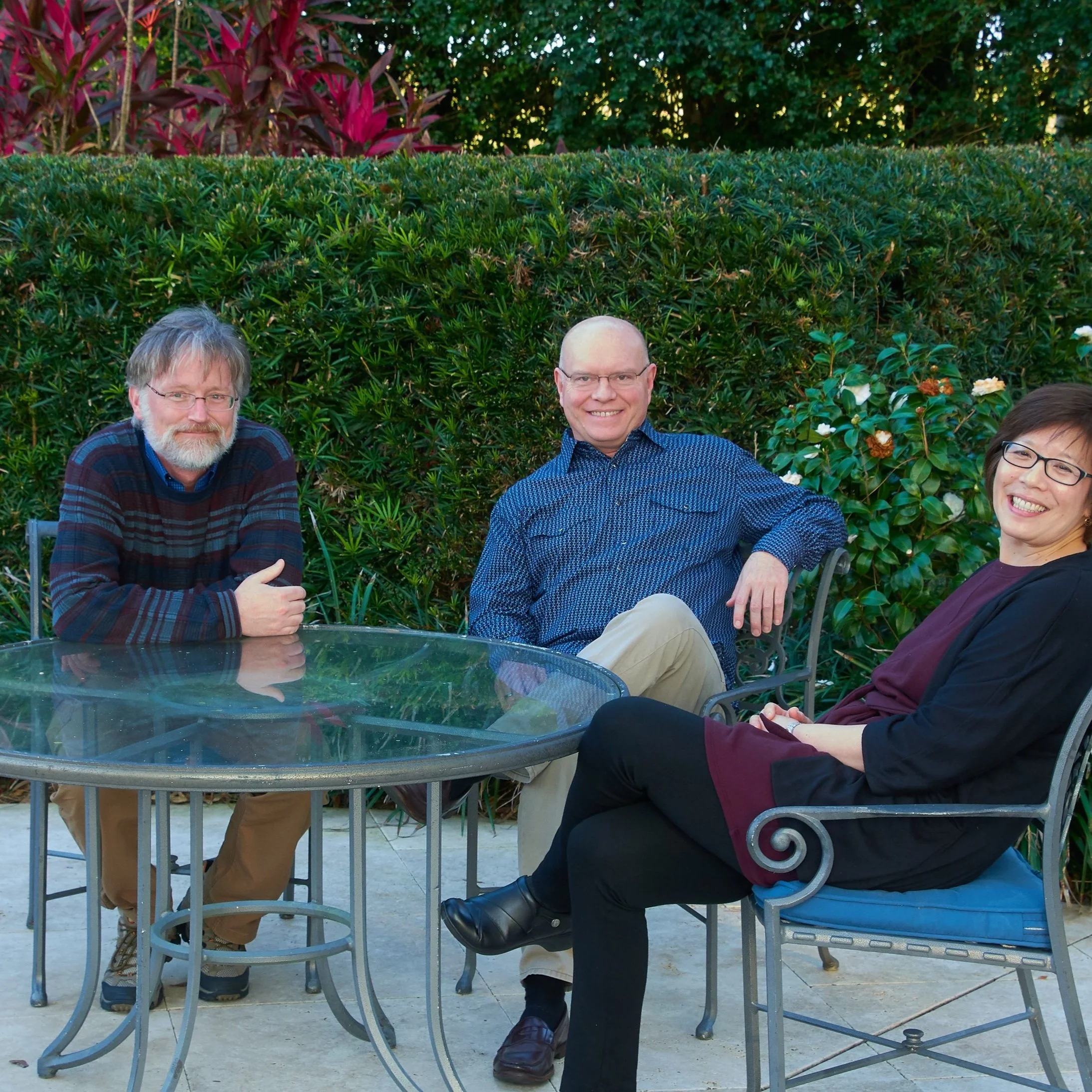
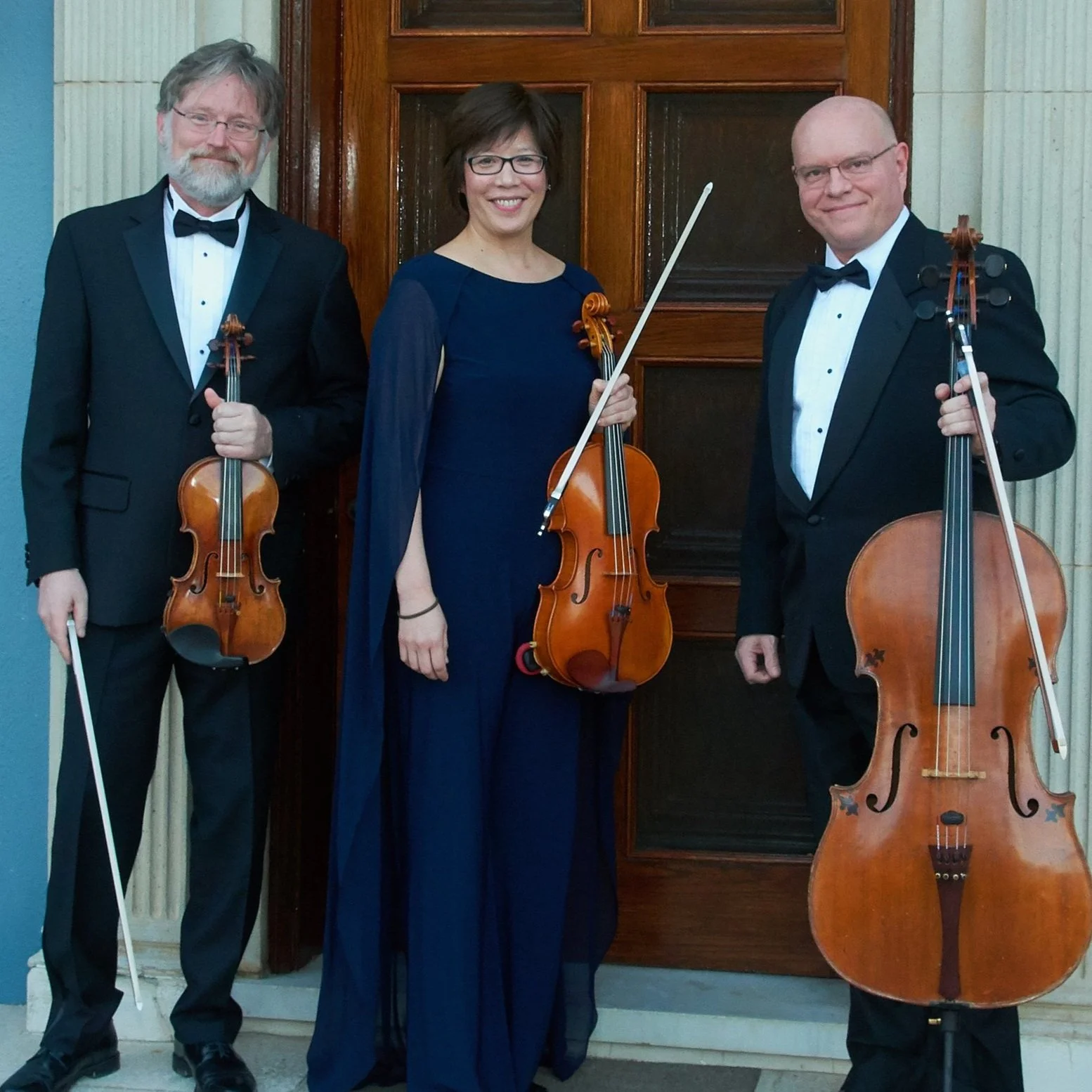
The Aspen String Trio
Known for their elegance, interpretive depth, and refined artistry, the Aspen String Trio is one of the rare professional string trios performing and touring today. Celebrated for visionary programming and virtuoso performances offered with humor and insight, AST performs the complete trios of Beethoven, Mozart, and Schubert, as well as blockbuster works by Dohnanyi, Harbison, Hindemith, Martinů, Rozsa, Klein, Veress, Villa-Lobos and Ysaÿe, among others. Their many “themed” concert programs are in high demand, including a Goldberg Variations lecture recital, Remembered Voices, offering works of heartstopping beauty by composers tragically suppressed by the Nazi regime, and a new program that imaginatively explores John Harbison’s brilliant new trio, “a major addition to the tiny string trio repertory,” paired with the work that inspired it, Mozart’s K563 “Divertimento,” an extraordinary masterpiece that hides under its title. During his recent centennial year, AST introduced Mieczysław Weinberg’s ravishing, re-discovered String Trio.
Consistently praised for their masterful sensitivity and nuance, their ultra-refined musicianship, tight ensemble work and musical intelligence, AST formed as summer artist teaching colleagues at Aspen Music Festival and School more than twenty years ago. Violinist David Perry, formerly a member of the Orpheus Chamber Orchestra, now leads the Pro Arte Quartet, in residence at University of Wisconsin-Madison, where he holds a Collins Endowed Professorship; he is also concertmaster of the Chicago Philharmonic. Violist Victoria Chiang is a member of the artist faculty of the both the Peabody Conservatory of Music and the McDuffie Center at Mercer University, was formerly on the faculty of The Juilliard School and the Hartt School of Music, and previously served on the board of the American Viola Society. Cellist Michael Mermagen is Associate Professor of Cello at UMKC Conservatory of Music and Dance; formerly Associate Professor of Cello and Chamber Music at The Catholic University of America, and he has served as Chamber Symphony Principal Cellist of the Aspen Music Festival and School for more than 25 years.
Engagements in recent seasons have included performances paired with educational outreach for the Ashville Chamber Music Series, Omaha Chamber Music Society, Omaha Conservatory of Music, University of Nebraska-Omaha, the National Music Museum, the Bach Festival Society, Rollins College, the Rutenberg Series (USF, Tampa), Chamber Music Society of Logan, Lousiana State University in Baton Rouge, The Artists’ Series (Tallahassee), Beaux Arts Chamber Music Series (Naples), Chamber Music Kelowna (BC), Los Angeles Music Guild, Barge Music (New York), and the National Gallery of Art (Washington, DC). The trio has held extended residencies in Texas, Georgia, the Carolinas, Iowa, Alabama, Delaware, Washington, and Colorado. For six seasons AST was Ensemble-in-Residence at the University of Baltimore.
The trio offers extensive outreach as an integral part of all residencies. As teaching faculty at distinguished universities and conservatories, trio members are all master teachers, offering inspiring classes, lessons and chamber music coachings for all ages and experience levels. While on the road they perform in community centers, senior residences, and in health care facilities. They also offer a variety of professional development workshops focusing on career-oriented topics such as: The business of music, The successful chamber ensemble, Teamwork and leadership, Effective rehearsal strategies, and Teaching as a profession.
The Aspen String Trio has recorded music of Mozart, Beethoven and Strauss, and is currently preparing the complete string trios and other music of Martinů for release on the Naxos label.

David Perry, Violin
Violinist DAVID PERRY enjoys an international career as chamber musician, soloist, and teacher. Mr. Perry has performed in Carnegie Hall, and at most of the major cultural centers of North and South America, Europe, and the Far East. His Naxos recording of the Pleyel violin concertos has garnered rave reviews and continues to be aired frequently on SiriusXM Radio. Other solo recordings are on the Sonos and Sonari labels.
Mr. Perry joined the Pro Arte Quartet as first violinist in 1995 and with them he has made numerous recordings, toured extensively throughout the U.S., Europe and Japan, and performed regularly in live broadcasts on Wisconsin Public Radio and Chicago’s WFMT. The quartet celebrated its centennial anniversary in 2012, with commissions from William Bolcom, John Harbison, Pierre Jalbert, Walter Mays, Benoît Mernier, and Paul Schoenfield.
David Perry served on the artist-faculty of the Aspen Music Festival for more than two decades, where he was concertmaster of the Aspen Chamber Symphony and a founding member of the Aspen Ensemble, which concertized internationally. He continues to tour the U.S. regularly as founding violinist of the Aspen String Trio.
Concertmaster of the Chicago Philharmonic, Mr. Perry has served as guest concertmaster with groups including the China National Symphony Orchestra, the Ravinia Festival Orchestra, and the American Sinfonietta. Active with the Orpheus Chamber Orchestra for many years, he participated in many of that ensemble’s Deutsche Grammophon recordings.
Mr. Perry is Artist-in-Residence and Professor of Violin at the University of Wisconsin School of Music, where he was named a Paul Collins Endowed Professor in 2003. His early training was with John Kendall and Almita Vamos, followed by studies with Dorothy DeLay, Paul Kantor, and Masao Kawasaki at the Juilliard School. A 1985 U.S. Presidential Scholar in the Arts, his first prizes include the International D'Angelo Competition, National MTNA Auditions, and the Juilliard Concerto Competition.
Victoria Chang, viola
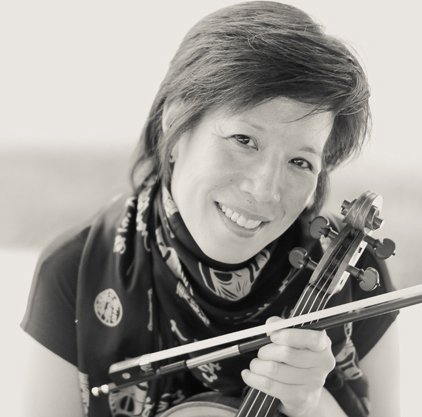
VICTORIA CHIANG has performed as soloist, recitalist, and chamber musician across North America, Europe and Asia. Her most recent recording of the viola concertos of Stamitz and Hoffmeister was released by Naxos to critical acclaim. Other recordings include Pleyel Sinfonia Concertante for Violin and Viola also on Naxos as well as a recording of Shostakovich and Roslavets Viola sonatas. She has performed as soloist with the National Philharmonic Orchestra, The National Gallery of Art Orchestra, the Cincinnati Chamber Orchestra, the Romanian State Philharmonics of Constantsa and Tirgu Muresh, the Duluth Superior Symphony Orchestra, the Acadiana Symphony (Lafayette, LA) and the Baltimore Chamber Orchestra. Ms. Chiang has collaborated as guest artist with Guarneri, Takacs, Tokyo,
American, Arianna and Pro Arte String Quartets, and with members of the Emerson, Cleveland, and Juilliard String Quartets. She has been a regular guest artist at the Amelia Island Chamber Music Festival, a frequent guest on the Bargemusic series, and has given solo performances in Carnegie Hall's Weill Recital Hall and at the XXV, XXXVIII and XL International Viola Congresses.
Ms. Chiang is a founding member of The Aspen String Trio. The group concertizes internationally, and was Ensemble in Residence at the University of Baltimore for six seasons. In addition to being on the faculty of the Peabody Conservatory of Music and the Aspen Music Festival, Ms. Chiang has recently joined the viola faculty at the McDuffie Center at Mercer University. Formerly on the faculty of The Juilliard School and the Hartt School of Music, and a former member of the board of the American Viola Society, her students hold significant positions in orchestras, in string quartets, and on conservatory faculties across the US and in Europe. Additionally, Ms. Chiang has taught at the Perlman Music Program: Winter Residency in Sarasota, Madeline Island Chamber Music Festival, Heifetz International Music Institute, Domaine Forget, Great Wall Festival (Beijing) among others.
Ms. Chiang earned the Master of Music degree and Performer's Certificate from the Eastman School of Music, and the Bachelor of Music degree from the Cincinnati College-Conservatory of Music. Her principal teachers include Heidi Castleman and Masao Kawasaki, viola; and Dorothy DeLay and Kurt Sassmannshaus, violin.
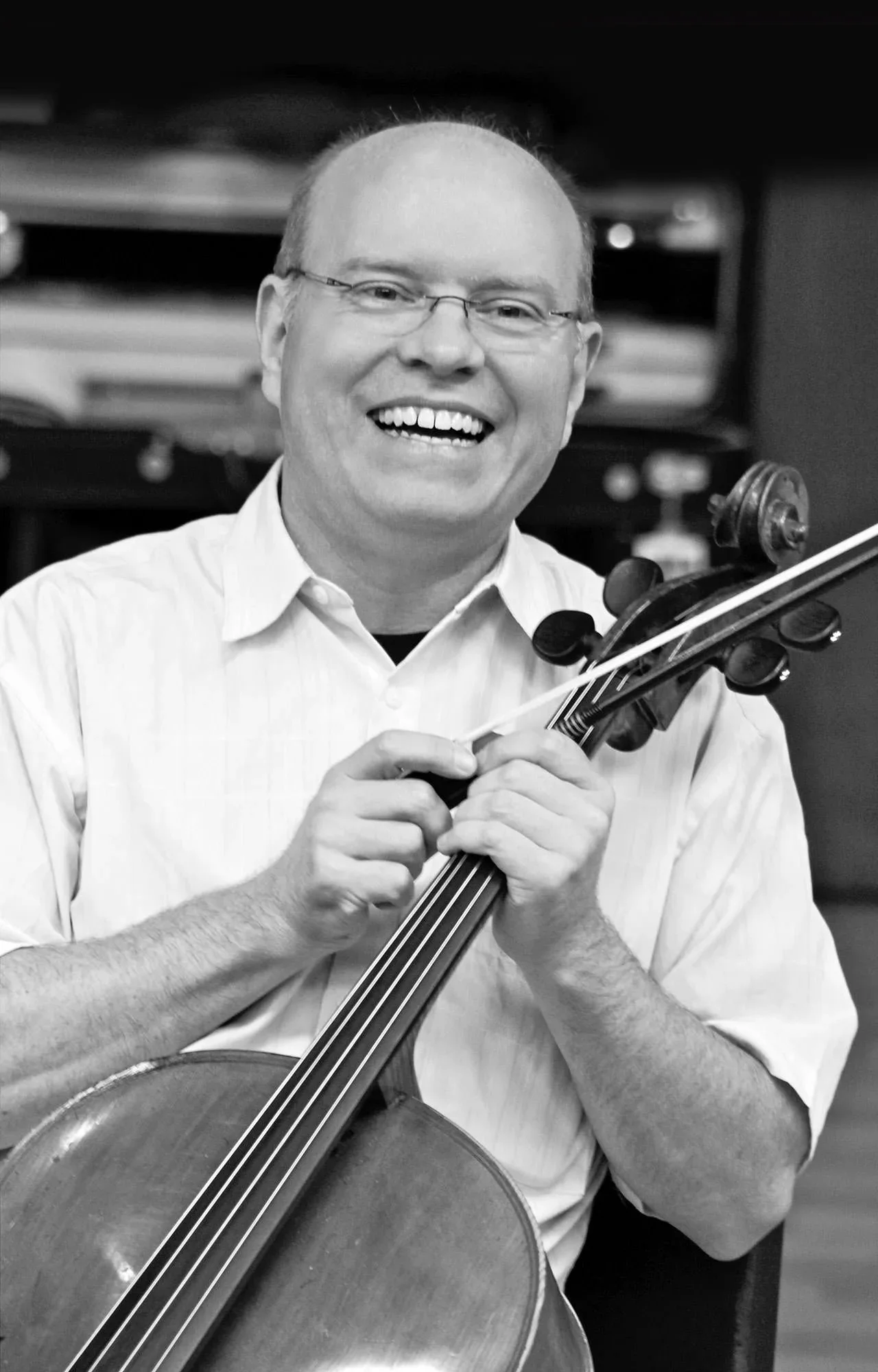
Michael Mermagen, cello
MICHAEL MERMAGEN made his debut at the age of sixteen with Baltimore Symphony Orchestra after receiving its Young Soloist’s Award. He studied at Peabody Preparatory, Peabody Conservatory, and The Juilliard School where, as concerto competition winner, he performed with Juilliard Orchestra under Otto-Werner Mueller in Alice Tully Hall. He was soloist and principal cello with National Orchestra of New York, and performed in Violoncello Society of New York Master Classes lead by Yo-Yo Ma, Janos Starker, and Bernard Greenhouse.
Michael toured regularly with The Aspen Ensemble, the American Chamber Players and Arista Piano Trio, collaborated with the San Francisco Ballet, and was featured as cello soloist for the New York premiere of two works by the renowned choreographer Mark Morris. He was a member of Rome Trio at Catholic University, and currently performs with the Aspen String Trio, formerly ensemble-in-esidence at the University of Baltimore.
As an artist-faculty member at the Aspen Music Festival and School, Michael has been principal cellist of the Aspen Chamber Symphony for more than twenty-five seasons. Chamber music partners there include Joshua Bell, Sarah Chang, Jeremy Denk, Vladimer Feltzman, Lynn Harrell, Robert McDuffie, Susanne Mentzer, Anton Nel, Nadja Salerno- Sonnenberg, Gil Shaham, The Takács Quartet, and the Weilerstein family. He has also collaborated with many distinguished conductors, including Comissiona, Conlon, Levine, Maazel, Marriner, McGegan, Robertson, Skrowaczewski, and Zinman.
For over twenty-five years, Michael has toured and given recitals, concerto performances, master classes, and chamber music performances around the world. He has recorded on the Arabesque label, and will soon release Music of Martinu for Naxos label with the Aspen String Trio.
Formerly at The Catholic University of America, where he was Associate Professor of Cello and Chamber Music, Head of the Instrumental Division, and Adviser in Orchestral Instruments, Mike is now Professor of Cello at UMKC Conservatory of Music and Dance.