LunART Chamber Music Collective
PLEASE NOTE: THIS CONCERT IS NOW SOLD OUT.
PLEASE JOIN OUR WAITLIST.
Works for flute, viola and harp by Bonis, Debussy, Hoover, and Larsen.
Celebrating all women in the arts on International Women’s Day during Women’s History Month 2026.
Iva Ugrčić | Madlen Breckbill | Johanna Wienholts


"LunART is one of the premier arts organizations in the country shining a bright and beautiful spotlight on women in the arts."
“Echoes of Time beautifully captures the luminous, and at moments hauntingly eerie sound of flute, viola, and harp that resonates across more than a century of music. These instruments create a sound world that feels both intimate and transcendent. From the impressionistic elegance of Claude Debussy’s sonata and the richly evocative landscapes of Mel Bonis, to the expressive lyricism of Katherine Hoover and the contemporary voice of Libby Larsen, each work reflects the past while speaking in its own distinct musical language. Together, these works weave a shimmering dialogue across generations, each rooted in its time and place while their voices continue to resonate deeply within us.” - Iva Ugrčić , Artistic Director, LunART
Program
Katherine Hoover - Dances and Variations (1995), for flute and harp
Mel Bonis - Scènes de la Forêt, Op. 123 (1927), for flute, viola & harp
Libby Larsen - Trio in Four Movements (2005) , for flute, viola & harp
Claude Debussy - Sonata for Flute, Viola, and Harp (1915)
The Artists
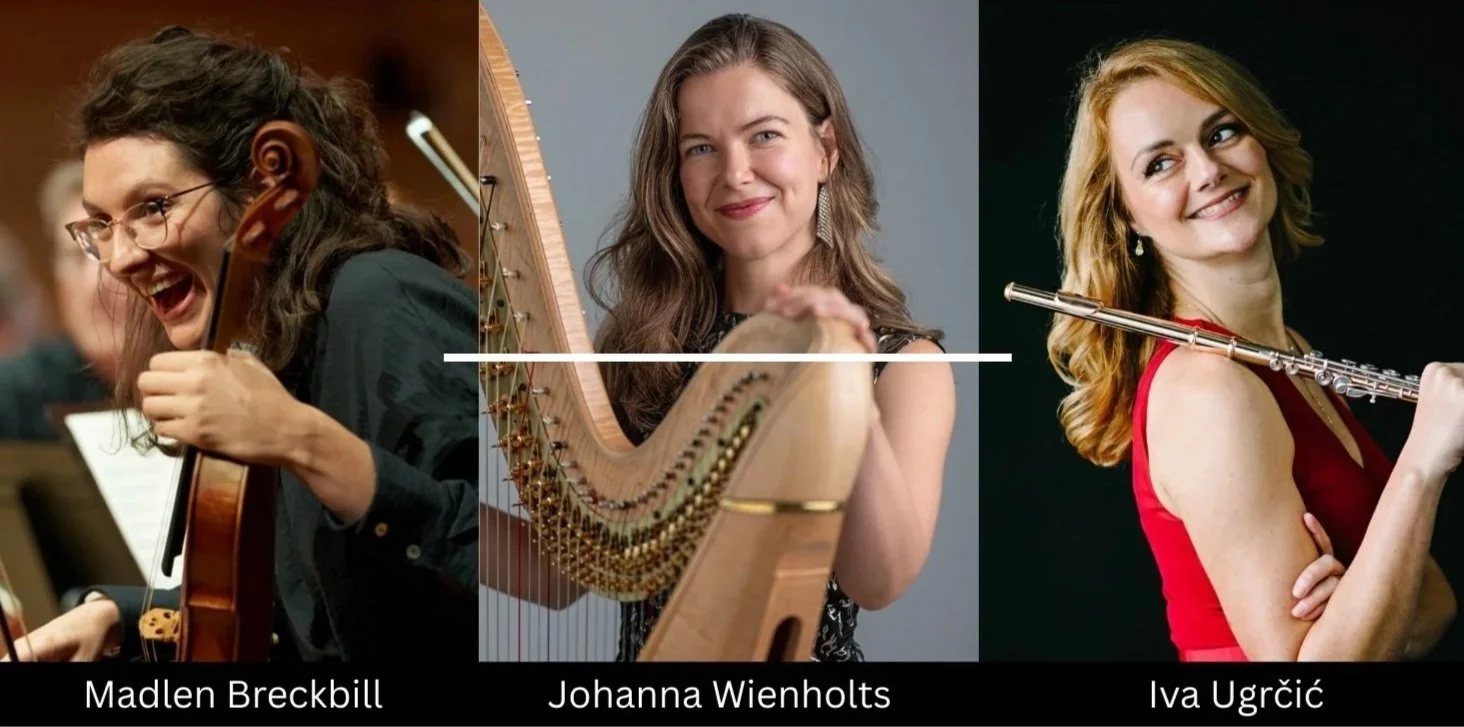
Violist Madlen H. Breckbill has worked extensively in Germany & Denmark, toured China and Japan, and performed across Europe and North America. Madlen founded Samtalä: Musicians in Dialogue (formerly the Stoughton Chamber Music Festival), fostering diverse and experiential programming. She has also performed with trio with(out), Bach Dancing & Dynamite Society, Midsummer Music, the Token Creek Chamber Music Festival, The Happenstancers, and the West End Micro Music Festival. She plays regular as violin/viola sub with the Madison Symphony Orchestra, Wisconsin Chamber Orchestra, and the Quad Cities Symphony Orchestra. Madlen trained early with Suzuki Strings of Madison and WYSO, earned bachelor’s and master’s degree from UW-Madison, and an Artist Diploma from the Glenn Gould School in Toronto. Her primary teachers include violinists David Perry, Paul Kantor, Erica Raum, Barry Shiffman, and violists Steven Dann and Sally Chisholm. Read more
Dr. Iva Ugrčić is one of the most versatile and adventurous flutists on the international scene, praised for “virtuosic technique, impeccable intonation, and gorgeous, rich tone.” She has performed at Carnegie Hall, with New World Symphony, at Sale Cortot, and at Ravinia. Her degrees are from the University of Belgrade (Serbia), the Albert Roussel Foundation (France), and UW-Madison. Her numerous awards include firsts from The American Prize, both in solo and chamber music, the Gold Medal at the International Vienna Competition, finalist for the Pro Musicis International Award, and winner of the Pittsburgh Chamber Society Competition. A champion of new music, her most recent solo album, Gates of Dream (2024), features works of contemporary Roumanian composer Doina Rotoru. Iva is the founder and director of LunART, teaches at Duquesnes University and Indiana University of Pennsylvania, and is owner of Artistic Wealth Coach, LLC. www.ivaugrcic.com
Johanna Wienholts is a harpist and creative artist celebrated for her authentic, expressive sound and joyful stage presence. Formerly a freelancer in New York and Toronto, performing with ensembles across the United States and Canada, she is on the faculty of UW’s Mead Witter School of Music. Johanna is principal harpist of the Madison Symphony and Madison Opera, and performs regularly with the Wisconsin Chamber Orchestra. A sought-after chamber collaborator, she has played with the Green Lake Chamber Music Festival, Bach Dancing and Dynamite Society, and Willy Street Chamber Players. Johanna holds degrees in classical harp performance from University of Toronto and Manhattan School of Music. Principal teachers include Judy Loman, Mariko Anraku and Joan Holland. Recognized for her work in expanding the classical harp repertoire and exploring diverse musical traditions, Johanna recently released an album of Iranian folk songs with violinisit Ava Shadmani. www.Johannawienholtsharp.com
Program Notes

HOOVER Dances and Variations (1995)
“Dances & Variations (1995) was commissioned by Dr. and Mrs. James P. Carey and Marshall University for Wendell Dobbs. The flute and harp are both ancient and beautiful instruments, and their sounds complement each other in unique ways. I have explored some of these combinations in this piece. The light-natured Entrada has shifting rhythms in both instruments, and quotes some children's tunes now and again. The Adagio is rather stark, with a measured ostinato in the harp and contrasting, rhythmically free gestures in the flute. These eventually come together in a slow melodic section. These two movements comprise the "Dances" of the title, for they are both involved with various kinds of motion, and I would love to see them choreographed at some time. The third movement is a series of variations on a lovely tune written in 1759 by Francis Hopkinson, a Philadelphia lawyer and a signer of the Declaration of Independence. The song is called My Days have been so wondrous free, with a text by Thomas Parnell from Love and Innocence. The variations are rather "wondrous free" themselves, having been influenced as much by the words as by the melody, and moving far from the original, though returning for a straightforward rendition of the tune at the end.”
—Katherine Hoover
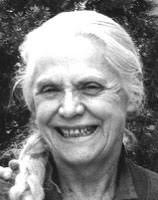
BONIS Scènes de la forêt, Op. 123 (1927)
Scènes de la forêt is one of Mel Bonis’s most atmospheric late works, a cycle that reflects her gift for vivid musical imagery and refined harmonic color. Written during a period of renewed productivity in the final decades of her life, the piece exemplifies Bonis’s mature voice: lyrical, sensitively constructed, and quietly original.
Rather than offering a literal narrative, Bonis suggests a sequence of forest impressions—shifting light, gentle motion, and moments of introspection—through supple melodic lines and nuanced textures. The music unfolds with a natural fluidity, favoring atmosphere over display, and balance over drama. Harmonic language rooted in late Romanticism is enriched by modal inflections and subtle chromaticism, lending the work a distinctive tonal palette.
Long overshadowed by her male contemporaries, Bonis is now recognized as a significant French composer whose music bridges Romantic expressiveness and early twentieth-century clarity. Scènes de la forêt stands as a compelling example of her ability to evoke place and mood with economy and poise, inviting listeners into an intimate sound world shaped by suggestion rather than statement.
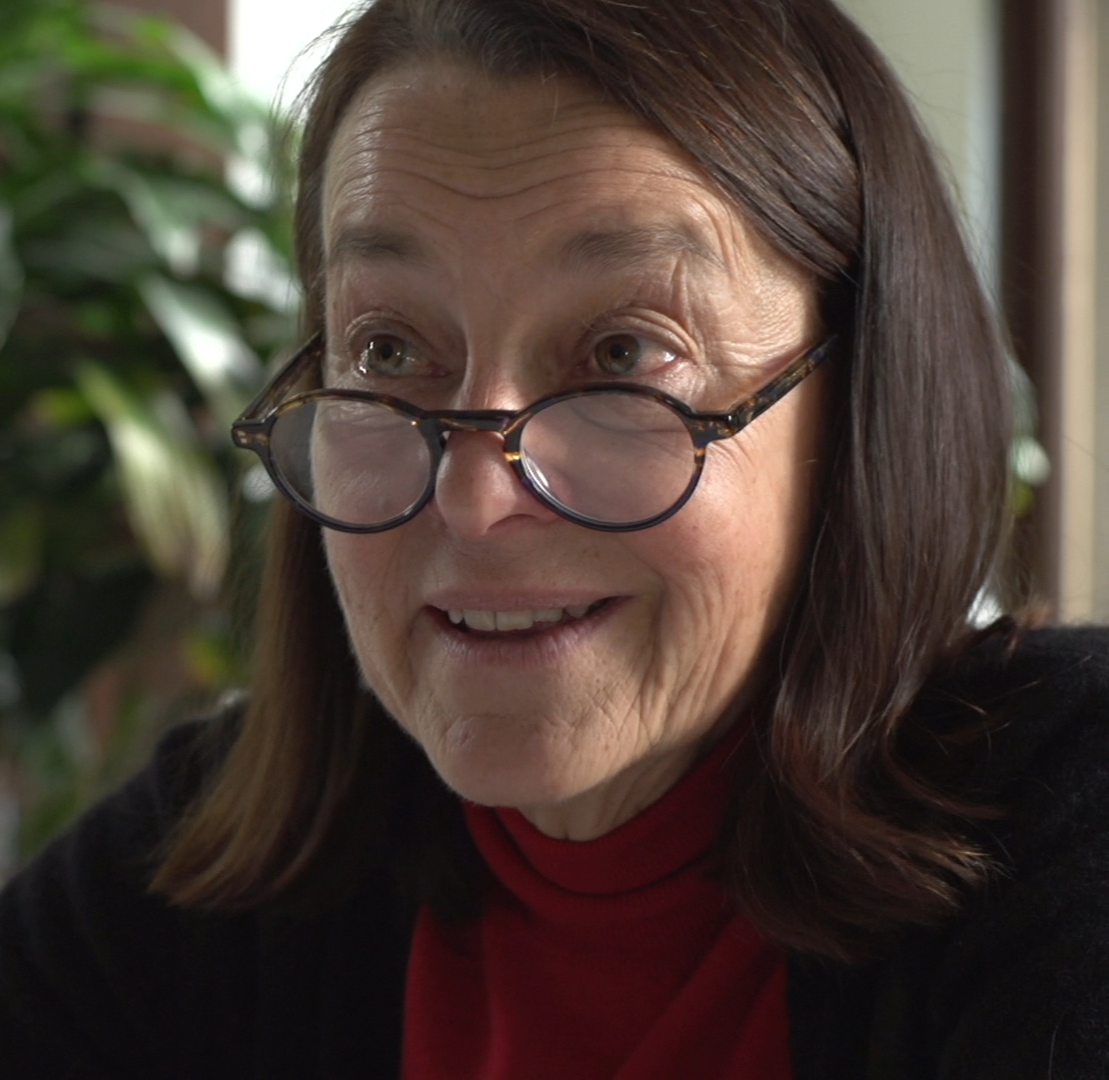
LARSEN Trio In Four Movements (2005)
“In Trio in Four Movements, I set about to use clarity of gesture and economy of texture to create an elegant vehicle for lyric expression. Each of the four movements explores this idea in its own way.
In Movement I, I gave the flute long, fluid, lines, free of metric intervention supported by the viola and harp. Further into the movement, the three instruments engage in a four-measure dialogue, and then return to the previous texture to complete the movement. Doily texture is my exploration in the brief (1 minute, 15 seconds) Movement II. Its agile, intertwined, filament-like musical effect is contrasted by Movement III. Pulse—calm, quiet, flowing— lies at the heart of Movement III. Lyrical lines are presented in the instruments, sometimes solo, sometimes unison, sometimes in moments of imitation. Movement IV uses dart gestures, articulation, quicksilver and air cadence to create its effect.” —Libby Larsen
MORE INFO
Interview with Libby Larsen and the American Harp Society.
NOTE: Libby Larsen will be Composer-in-Residence at the “Composers’ Hub” during the 2026 LunART Festival, May 26-31, 2026. Read an interview with Larsen conducted by LunART Production Intern Hannah Gardner in October 2025.
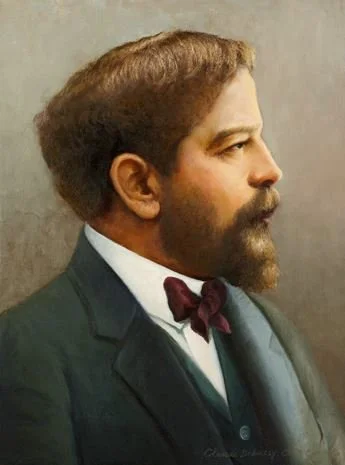
DEBUSSY
Sonata for flute, viola, and harp (1915)
Claude Debussy’s Sonata for Flute, Viola, and Harp (1915) opens the cycle of six sonatas he planned during the final years of his life. Conceived amid the upheaval of World War I, the sonatas reflect Debussy’s renewed engagement with clarity, economy, and the lineage of French music, filtered through his unmistakable harmonic language.
The unusual instrumental pairing creates a world of muted colors and shifting light. Rather than dramatic contrast, Debussy favors suggestion: melodies emerge and dissolve, textures breathe, and harmony functions as atmosphere as much as structure. Across its three compact movements, the music balances suppleness and restraint, intimacy and poise.
Unprogrammatic by design, the sonata resists narrative interpretation. Its expressiveness lies in timbre, contour, and resonance—an exploration of sound itself, distilled to its most refined essentials.
More information:
Listen to Bruce Adolph’s “Inside Chamber Music” podcast for the Chamber Music Society of Lincoln Center. Lincoln Center.